

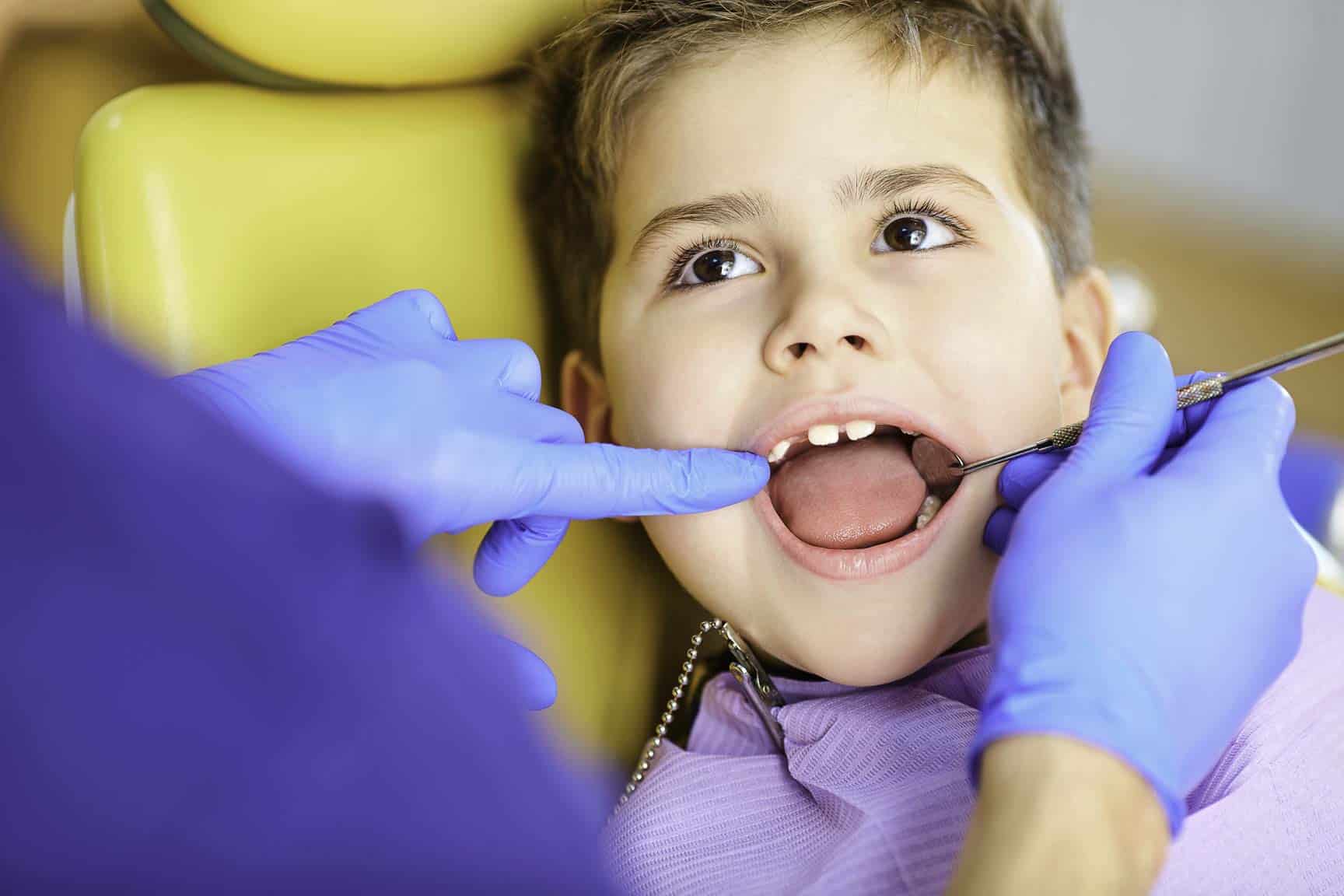
Pulpotomy for Kids in Modesto, CA
When a cavity in a baby tooth gets deep enough to reach the nerve, many parents assume the tooth has to come out. Often it doesn’t. A pulpotomy for kids in Modesto is a gentle, common treatment that removes the irritated part of the nerve, calms the tooth down, and lets your child keep it until the adult tooth is ready.
You may hear it called a “baby root canal,” but a pulpotomy is usually simpler than an adult root canal. At Family and Kids Dental, Dr. Syed Hyder explains every step to parents and children in plain words before anything begins.
What Is a Pulpotomy?
Every tooth has soft tissue inside called the pulp, which holds nerves and blood vessels. When decay or an injury reaches the pulp in the crown (the part you see), that tissue becomes inflamed and the tooth starts to hurt.
In a pulpotomy, the dentist removes only the affected pulp in the crown. The healthy pulp in the roots stays. A medicated material is placed over it, the tooth is sealed, and most baby molars then get a crown for protection. The goal is to keep the tooth comfortable and working.
Pulpotomy vs. Pulpectomy vs. Extraction
These three get confused a lot. In general terms:
- Pulpotomy removes inflamed pulp from the crown only, when the root pulp still looks healthy.
- Pulpectomy removes pulp from the crown and the roots, then fills the canals with a material a baby tooth can absorb as it loosens. It’s used when inflammation or infection has spread deeper.
- Extraction removes the whole tooth, usually when it’s too damaged to save or already close to falling out.
The right choice depends on the exam, the X-rays, and how long that tooth still needs to stay in place.
Signs Your Child May Need Kids Pulp Treatment
Children don’t always describe tooth pain clearly. A four-year-old might say their “cheek hurts” or quietly stop chewing on one side. Watch for:
- Lingering sensitivity to cold drinks or sweets
- Pain when chewing, or favoring one side
- A dark spot or hole in a back tooth
- A deep cavity found at a routine checkup, even with no pain yet
Pain that wakes your child at night, gum or facial swelling, a pimple-like bump on the gum, or a loose tooth can mean infection has gone further. Call the office soon. Facial swelling with fever needs prompt care, and our kids emergency dental care page explains what to do.
For example, imagine a six-year-old who has chewed only on the left side for two weeks and winces at cold milk. The dentist finds a deep cavity in a lower baby molar that just reached the nerve, but the X-ray shows healthy roots. That’s a typical case where a pulpotomy can save the tooth.
Types of Pulpotomies
Baby tooth pulpotomy
The most common type, done on baby molars with deep decay. The crown pulp is removed and a medicated material is placed over the root pulp. Dentists use several well-studied materials, chosen by clinical judgment. Most treated molars then get a crown.
Pulpotomy in young permanent teeth
A child’s adult teeth keep growing their roots for a few years after they come in. If a young permanent tooth has a nerve exposure, say from a chipped front tooth or a deep cavity in a six-year molar, the dentist may remove only part of the pulp (a partial pulpotomy) or all of the crown pulp (a full pulpotomy). Keeping the root pulp alive helps the root finish developing. These teeth are watched over time, and if a case needs a specialist, we’ll explain your options and refer you.
Benefits of Saving the Tooth
- Stops the pain. Removing inflamed tissue usually relieves the toothache.
- Holds space for the adult tooth. Baby molars guide permanent teeth into place. Losing one early can let nearby teeth drift into the gap.
- Keeps chewing and speech normal.
- Can avoid a space maintainer. When a baby molar is pulled early, a space maintainer for a missing tooth is often needed.
- Stops infection from spreading to the gums, bone and developing adult tooth.
Our blog post on why baby teeth cavities matter explains the bigger role baby teeth play.
What Happens During the Visit
A pulpotomy is usually finished in one appointment:
- Exam and X-rays to see how deep the decay goes and confirm the roots look healthy.
- Talking it through with you and your child in kid-friendly words.
- Numbing, with a gel on the gum first, then local anesthetic.
- Keeping the tooth dry with a small rubber shield or cotton.
- Removing the decay and crown pulp.
- Placing the medicine over the healthy root pulp.
- Sealing and protecting the tooth, usually with a crown. Our kids crowns page explains the options.
Keeping your child comfortable
Nervous kids are normal. We explain things, show the tools in a non-scary way, and allow breaks. For especially anxious children, nitrous oxide (laughing gas) may help them feel calm while staying awake. It’s never a default. Dr. Hyder discusses it with parents first and uses it only when appropriate.
As another example, an eight-year-old who had a rough past visit and gets teary in the chair may do well with a slower pace, a clear “tell, show, do” explanation, and, if the parent agrees, nitrous oxide.
Aftercare and Recovery
Most kids feel normal the same day. A few tips:
- Watch the numbness. Lips and cheeks may stay numb for a few hours, so keep your child from biting them.
- Soft foods first once the numbness wears off.
- Expect mild soreness around a new crown for a day or two. A children’s pain reliever dosed for age and weight usually helps.
- Keep brushing gently the same night.
- Skip sticky candy, which can pull at a crown.
Call us if there’s swelling, fever, pain that worsens after a couple of days, or a loose crown.
Age Considerations
Pulpotomies are most often done on baby molars from toddler age through about 10 or 11, while those teeth still have years left. Back baby molars usually stay until around age 10 to 12.
Timing matters. If a baby tooth is already loose and the adult tooth is close, the dentist may suggest removing it instead. For a young child with years of chewing ahead, saving the tooth is usually worth it.
Cost, Medi-Cal and Insurance
Family and Kids Dental accepts Medi-Cal and most major dental insurance plans, and payment plans are available. Needed pulpotomies and crowns for children are often covered, but every plan is different, so please call our office to confirm your child’s coverage before the visit.
Why Modesto Families Choose Family and Kids Dental
Parents across Modesto, and from nearby Ceres, Salida and Riverbank, choose us because:
- Dr. Syed Hyder, DDS, has 9+ years focused on gentle whole-family care, with particular emphasis on children
- Kids and adults are seen under one roof
- We serve English and Spanish-speaking families
- We accept Medi-Cal and most major insurance, with payment plans
- Nitrous oxide is available for children when appropriate
Learn more on our kids dentist in Modesto page.
Frequently Asked Questions
Is a pulpotomy the same as a baby root canal?
People often call a pulpotomy a “baby root canal,” but they aren’t quite the same. A pulpotomy removes only the inflamed pulp in the crown and keeps the healthy pulp in the roots. A pulpectomy, which is closer to a true root canal, removes pulp from the roots too. A pulpotomy is usually quicker and less involved. The dentist chooses based on the exam, X-rays and how the tooth responds.
Does a pulpotomy hurt?
The tooth is fully numbed first, so most children feel pressure and vibration rather than pain. A numbing gel on the gum makes the shot easier. Afterward, the gum may be a little sore for a day or two, especially around a new crown. A children’s pain reliever dosed for your child’s age and weight usually handles it. Many kids feel better than before, because the toothache is gone.
Why not just pull the baby tooth?
Baby molars hold space for adult teeth and guide them into position. If one is pulled years early, nearby teeth can shift into the gap and crowd the permanent tooth, which often means a space maintainer. Saving the tooth also keeps chewing normal. Extraction still makes sense sometimes, such as when a tooth is badly infected or nearly ready to fall out. The dentist will explain the options for your child.
Will my child need a crown after a pulpotomy?
Most baby molars do. After decay and part of the pulp are removed, the tooth is weaker and more likely to crack. A crown covers the whole tooth so it can last until it falls out naturally. Front baby teeth and some smaller cases may be restored differently. Your dentist will explain which type of restoration fits your child’s tooth and why before treatment starts.
How long does a pulpotomy last?
A treated baby tooth with a crown is meant to last until it falls out on its own and the adult tooth comes in. Pulpotomies in baby molars generally have good success when the case is chosen carefully, though no treatment is guaranteed. Regular checkups let the dentist watch the tooth on X-rays. Good brushing and fewer sugary snacks help protect it and the rest of your child’s smile.
Does the treated baby tooth affect the adult tooth underneath?
A pulpotomy is meant to protect the developing adult tooth by stopping decay and inflammation before they spread. Leaving a deeply decayed baby tooth untreated is more likely to cause problems below. The treated tooth should loosen and fall out on a normal schedule. If it doesn’t, or the adult tooth comes in at an odd angle, the dentist can check it and recommend the next step.
Schedule a Pulpotomy for Kids in Modesto
If your child has a toothache, a dark spot on a back tooth, or a deep cavity found at a checkup, an early visit gives the best chance of saving the tooth with a pulpotomy for kids in Modesto instead of a bigger treatment later.
Family and Kids Dental
1207 14th St, Modesto, CA 95354
Phone: (209) 422-3176
Schedule your child’s appointment online or give us a call. We’re happy to help in English or Spanish.