A toddler’s first checkup and a grandparent’s denture adjustment look like two very different appointments. In a family practice, they often happen on the same afternoon, sometimes for people who share a last name and a kitchen table.
As a family dentist in Modesto, we see how a mouth changes over a lifetime. What matters at age two is not what matters at sixteen, during a pregnancy or at seventy-five. This guide covers what we look for at each stage, what to watch for at home, and why keeping everyone’s records in one place helps.
Babies and Toddlers (Birth to Age 3): Setting the Foundation
The first tooth usually shows up somewhere around six months, though anywhere from four to fifteen months can be normal. Current guidance from children’s dental organizations is to schedule a first dental visit by the first birthday, or within six months of that first tooth.
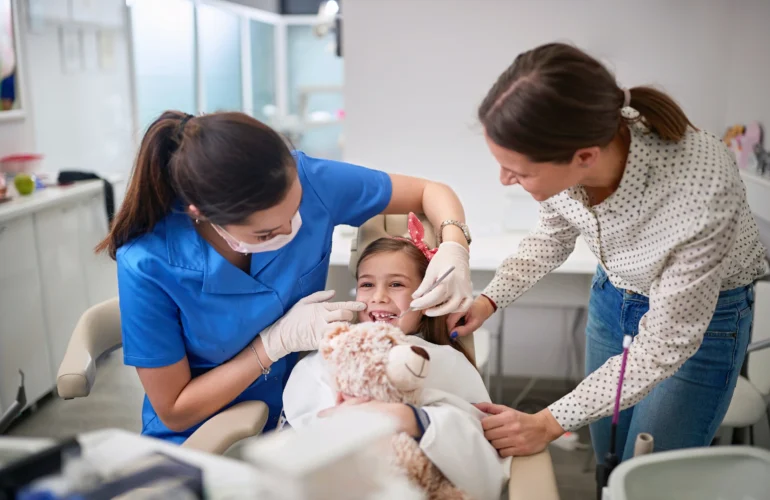
At this age, a visit is short and gentle, often with the child in a parent’s lap. We check how teeth are coming in, look for early white spots and talk about feeding and cleaning habits. Our infant oral care visits are built around this stage.
What to watch for at home:
- Chalky white lines along the gumline of the upper front teeth, often the first sign of early decay.
- Bottles or sippy cups at bedtime filled with milk, formula or juice.
- Toothpaste amount. Use a smear of fluoride toothpaste about the size of a grain of rice until age three.
- Long-term pacifier or thumb habits, which are worth mentioning at checkups as your child gets older.
School-Age Kids (Ages 4 to 12): Busy Mouths, Changing Teeth
Baby teeth fall out and permanent teeth arrive during these years. The first permanent molars come in around age six, behind the baby teeth, and many parents never notice them.
At this stage we focus on:
- Cavity prevention. From age three, use a pea-sized amount of fluoride toothpaste. Most kids need a parent’s help brushing until around age seven or eight.
- Sealants and fluoride. Thin protective coatings on the chewing surfaces of new molars help block the deep grooves where many childhood cavities start.
- Spacing and bite. Orthodontic specialists suggest a bite check around age seven. That doesn’t mean braces at seven, just an early look for crowding.
- Sports safety. A mouthguard protects new front teeth during contact sports.
For more on how we care for children, our kids dentist in Modesto page covers it.
Teenagers (Ages 13 to 19): Independence Has Its Risks
Teens take over their own brushing just as schedules get packed. Checkups slip, energy drinks show up, and cavities can appear in permanent teeth that were healthy a few years earlier.
Things we keep an eye on for teens:
- Orthodontic needs. Many teens are good candidates for braces or clear aligners, and brushing carefully around brackets matters during treatment.
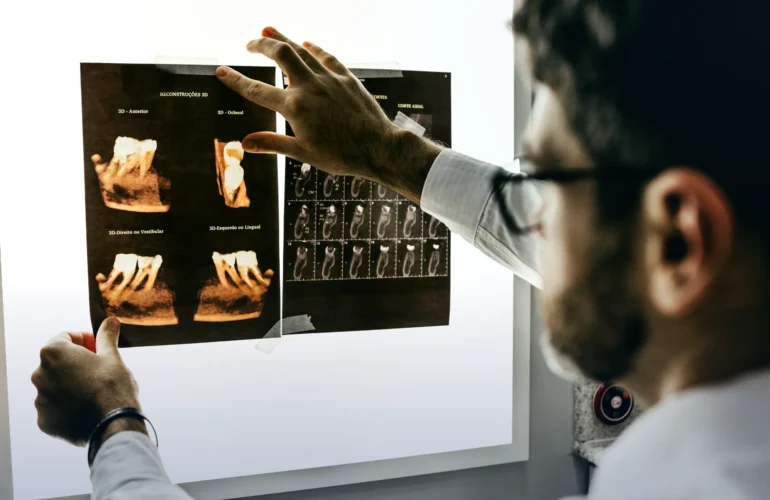
- Wisdom teeth. We monitor their position over time, since not everyone needs them removed.
- Vaping and tobacco. Both are linked to gum irritation and dry mouth. We bring this up without lectures.
- Acid wear. Frequent soda and sports drinks can soften enamel.
Adults (Ages 20 to 60): Protecting What You’ve Got
For adults, the two biggest concerns are gum disease and wear and tear.
Gum disease is common. The CDC estimates that roughly four in ten adults age 30 and older have some form of periodontitis, and it often doesn’t hurt in the early stages. Bleeding when you brush or floss is a common early sign, and it isn’t normal.
Adults should also watch for:
- Grinding or clenching. Signs include morning jaw soreness and flattened or chipped teeth.
- Worn or cracked fillings. When too much of a tooth is weakened, an adult dental crown can protect what’s left.
- Sensitivity to hot or cold, which can point to receding gums, a cracked tooth or decay.
- Changes that don’t heal, such as a sore, patch or lump in the mouth lasting more than two weeks. Oral cancer screening is typically part of a routine exam.
How often you need checkups depends on your health and history. Learn what’s included in a routine dental exam and emergency care.
During Pregnancy: Safe Care and Sensitive Gums
Many expectant mothers put off the dentist, but major dental and obstetric organizations agree that routine dental care, including cleanings, needed X-rays and local anesthetic for fillings, is safe during pregnancy. Postponing necessary treatment can be riskier than having it.
Hormone changes can make gums swell and bleed (pregnancy gingivitis), and morning sickness exposes teeth to stomach acid. A few habits help:
- Rinse with water (or water mixed with a little baking soda) after vomiting, and wait a bit before brushing.
- Keep brushing twice a day with fluoride toothpaste, even if your gums feel tender.
- Tell us you’re pregnant, and how far along, when you book.
There’s a family benefit too. Cavity-causing bacteria can pass from parent to baby through shared spoons, so a healthy mouth before baby arrives helps the whole household.
Older Adults (60 and Up): Dry Mouth, Roots and Gums
Teeth can last a lifetime, but the later years bring quieter challenges.
Dry mouth from medications. Hundreds of common medications, including some for blood pressure, depression and allergies, can reduce saliva. Less saliva means more cavities. Sipping water, chewing sugar-free gum and telling us every medication you take all help.
Root decay. As gums recede, the roots of teeth become exposed. Roots lack hard enamel, so they decay more easily, and extra fluoride may help.
Gum disease. It is a leading reason adults lose teeth. If arthritis makes brushing hard, an electric toothbrush often helps.
Dentures and missing teeth. If teeth have been lost, partial and complete dentures can restore chewing and confidence. They should be checked regularly as the gums underneath change.
Why One Family Dentist in Modesto Keeps the Picture Clear
When the whole family sees the same dentist, records stay continuous, and that has real value:
- Patterns show up. If a parent has a history of gum disease or deep grooves in their molars, we know to watch for the same in their kids.
- X-rays can be compared over the years, so small changes stand out instead of being guessed at.
- Medication and health changes are noted in one place, which matters a lot for older adults and during pregnancy.
About Family and Kids Dental
Family and Kids Dental, at 1207 14th St in Modesto, treats kids and adults under one roof. Dr. Syed Hyder, DDS, is a general dentist with 10 years of experience focused on gentle care for whole families, with particular attention to children. For kids who need extra help relaxing, nitrous oxide conscious sedation is available when appropriate, and it’s always discussed with parents first.
We welcome families from Modesto, Ceres, Turlock, Riverbank, Oakdale, Salida, Empire and Keyes. We accept Medi-Cal and most major dental insurance plans, offer payment plans, and our team serves both English and Spanish-speaking families. To see everything we offer for every age, visit our family dentist in Modesto homepage.
Frequently Asked Questions
Can my child and I be seen on the same day?
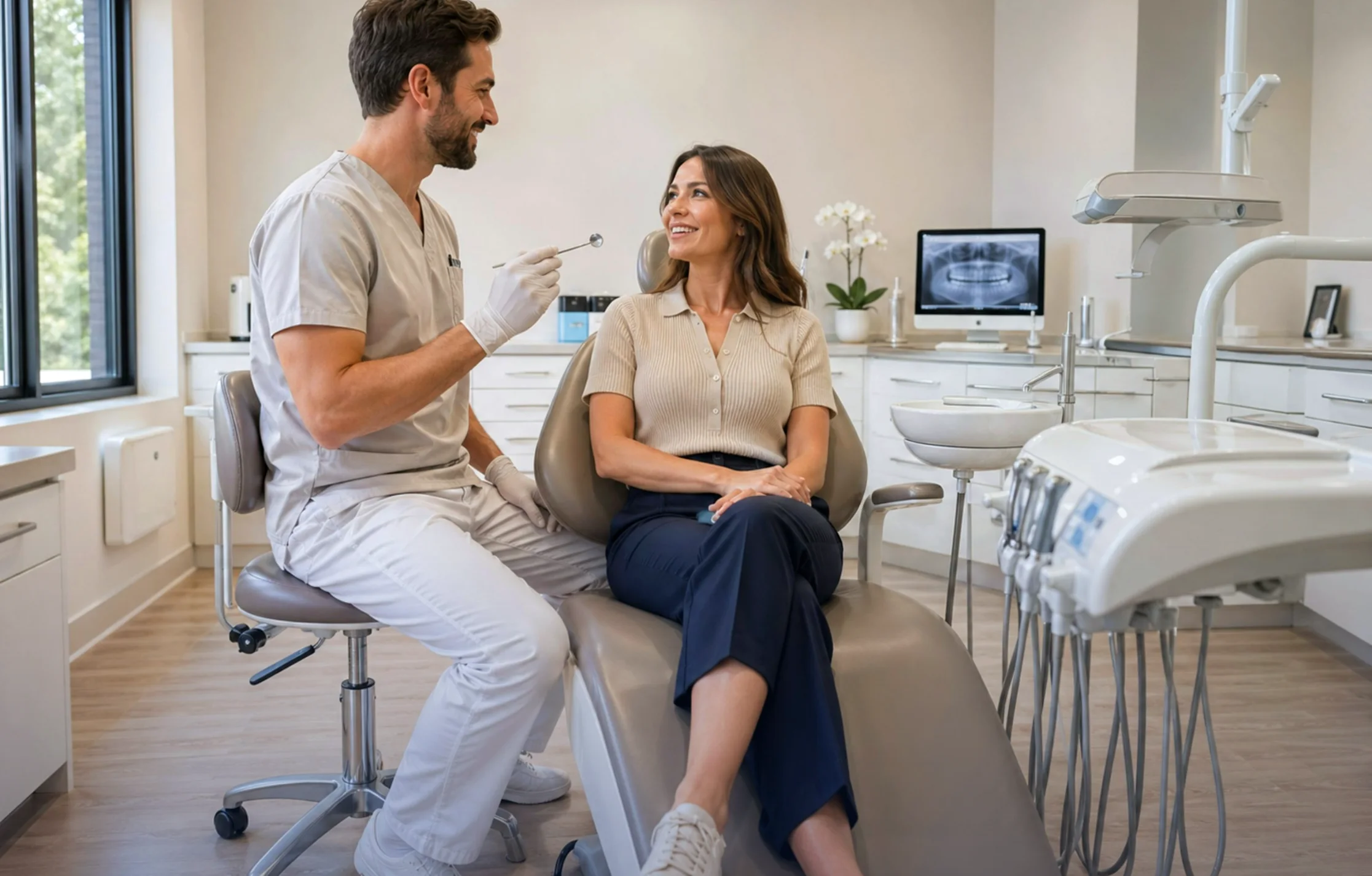
Many families like back-to-back appointments so parents and kids are seen in one trip. Younger children often feel more comfortable after watching a parent sit in the chair first. Availability depends on the schedule and the type of visit each person needs, so the easiest approach is to call our office, let us know who needs to be seen and what for, and our team will look for times that work together.
Is it really safe to get dental X-rays while pregnant?
Yes, when they’re needed. Leading dental and obstetric organizations consider dental X-rays safe during pregnancy. They use very low radiation aimed at the mouth, not the abdomen. Non-urgent X-rays can sometimes be timed differently, but X-rays needed to diagnose pain or infection shouldn’t be delayed. Always let us know you’re pregnant so we can plan care with that in mind.
My medications give me dry mouth. What can I do?
Tell your dentist and doctor exactly what you take, including over-the-counter products. Sip water through the day, limit caffeine and alcohol, and try sugar-free gum or lozenges. A bedroom humidifier can help too. Your dentist may recommend a higher-fluoride toothpaste or professional fluoride to protect against root decay. Don’t stop a prescribed medication without talking to your doctor first.
When should my teen start thinking about braces?
A bite check around age seven helps spot problems early, but most full orthodontic treatment starts once most permanent teeth are in, often between ages 10 and 14. Every case is different. Some teens benefit from braces, others from clear aligners, and some need no treatment at all. At routine checkups we watch how teeth and jaws are developing and let you know when an orthodontic evaluation makes sense.
Do older adults with dentures still need checkups?
Yes. Even without natural teeth, the gums, tongue and jaw still need examining, including oral cancer screening. Dentures also loosen as the bone underneath changes shape. A poor fit can cause sore spots, trouble chewing and infections at the corners of the mouth. Regular visits let us check the fit, adjust or reline dentures when needed, and catch problems early.
Does Medi-Cal cover dental care for adults as well as kids?
Medi-Cal Dental currently offers benefits for both children and adults, but covered services depend on age and eligibility, and program rules change. The state has announced that starting July 1, 2027, some adults will be limited to emergency dental services, while children under 19 and pregnant or postpartum members keep full dental benefits. Because details vary, please call our office with each family member’s information. We accept Medi-Cal and most major dental insurance plans, and we’ll help you understand what’s covered before treatment begins.
Book Care for the Whole Family
From a baby’s first checkup to a grandparent’s denture fitting, one office can follow your family’s smiles year to year. If anyone in your household is overdue, a family dentist in Modesto who already knows your history is a good place to start.
Family and Kids Dental
1207 14th St, Modesto, CA 95354
Phone: (209) 422-3176
Schedule an appointment online or call our office, and our team will help you find times that work for your family.